The History of Motorcycle Trials
While other forms of motorcycle racing are defined by speed, one discipline stands alone, defined by balance, finesse, and conquering impossible obstacles. Welcome to the world of motorcycle trials. This unique sport, often described as ‘ballet on two wheels,’ has a rich, century-old history.
1. The Early Days (Early 1900s)
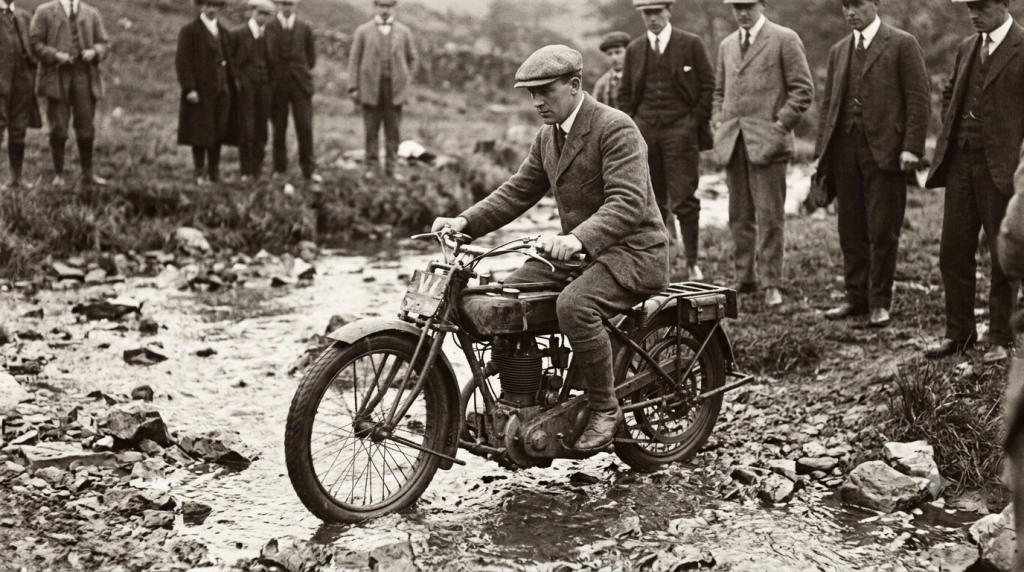
In the early part of the 20th century, ‘trials’ were exactly what the name suggests: a test of man and machine. They were not speed races but reliability runs, designed to prove that new-fangled motorcycles could handle the rough, unpaved roads and steep hills of the British countryside. Riders would compete over long distances, often over several days, and the earliest events were frequently called “reliability trials.”
The classic image from this era is a rider on a heavy, single-gear machine, wearing tweed and a flat cap, navigating a muddy stream.

2. Post-War Prowess (1940s–1960s)
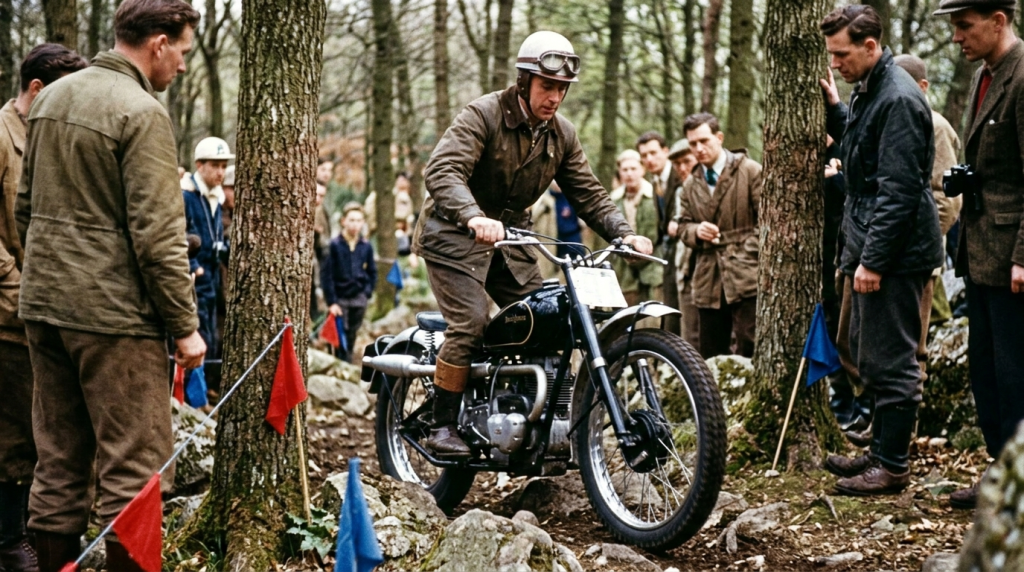
After World War II, motorcycles became more capable, and the focus of trials shifted from simple reliability to observational skill. Specific ‘sections’ were defined—short, challenging off-road courses marked with flags. Riders were penalised points (called ‘fives’ or ‘cleans’) for putting a foot down (a ‘dab’) or stopping. The goal: complete the section with zero penalties.
Bikes from this era, like the Triumph Tiger Cub or the AJS 350, were modified road bikes, but they began to feature higher ground clearance and trials-specific tyres. This era established the rules that still govern the sport today.
3. The Two-Stroke Revolution (1970s–1980s)
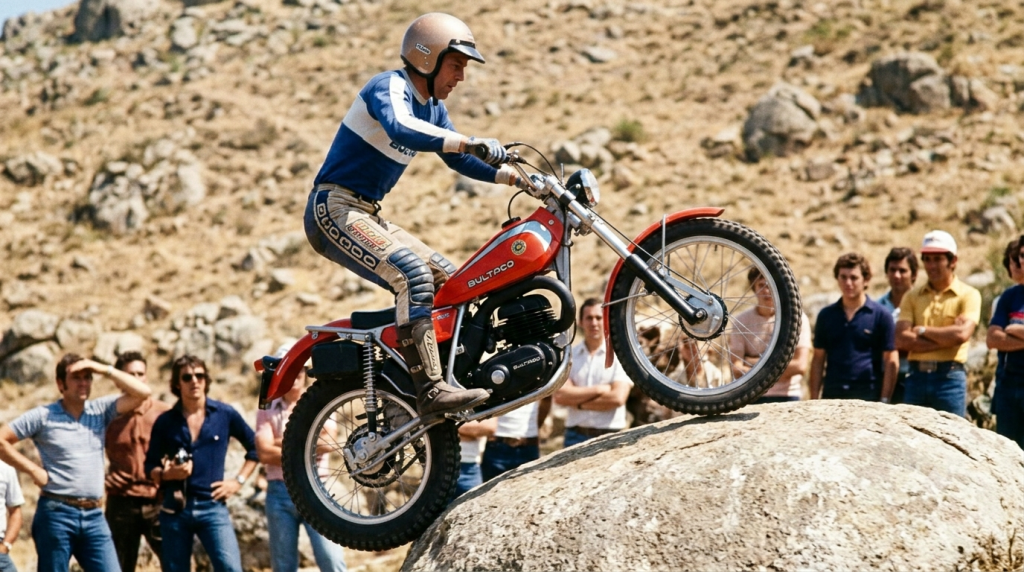
The biggest technological shift occurred in the 1970s. Spanish manufacturers, Bultaco, Montesa, and OSSA revolutionised the sport by introducing lightweight, incredibly agile two-stroke motorcycles designed from the ground up for trials.
The bikes, like the iconic Bultaco Sherpa T, were slimmer, had specialised suspension, and engines that delivered precise, low-end power. Riders like Sammy Miller and later Mick Andrews and Eddy Lejeune showed that these new machines allowed for manoeuvres previously thought impossible, such as jumping from a standstill or performing full ‘floater’ turns. Trials transformed into the specialised sport we recognise today.
4. The Modern Era (1990s–Present)
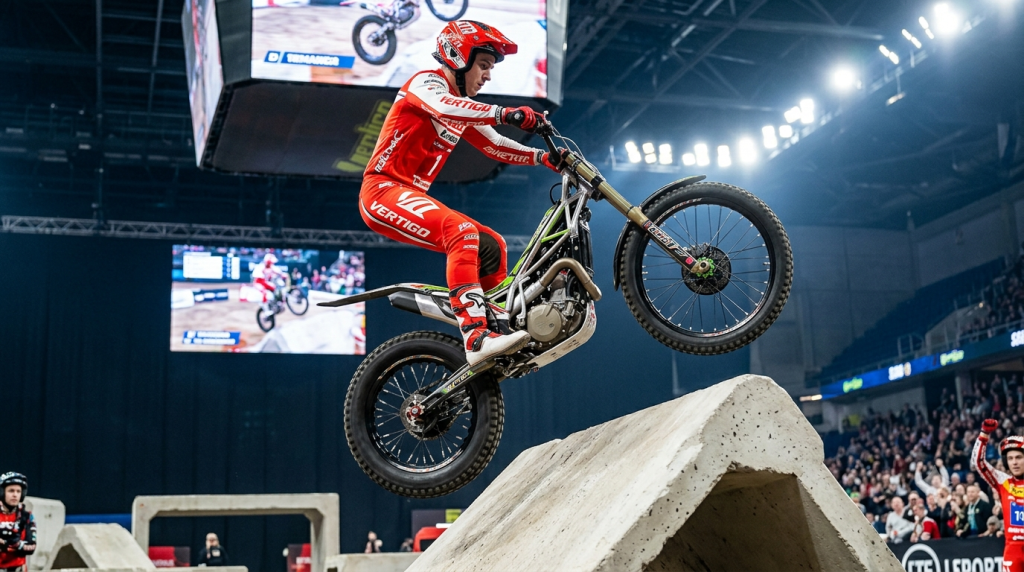
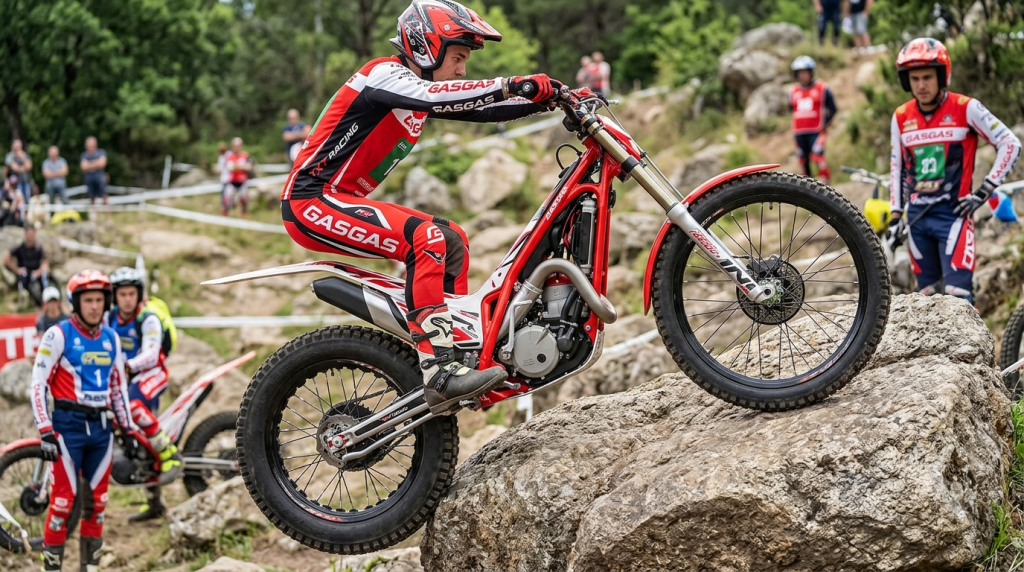
Today, trials bikes are wonders of extreme engineering. They are incredibly light (some under 70kg), feature hydraulic clutches, advanced disc brakes, and engines with sophisticated fuel injection (or, increasingly, powerful electric motors). The obstacles in modern world-championship sections are staggering—vertical rock faces, giant concrete pipes, and waterfalls that seem impassable.
Riders like Jordi Tarrés and Dougie Lampkin dominated this era, pushing the limits of human balance and bike control. In the current era, Toni Bou has rewritten the record books, demonstrating a level of mastery that is hard to comprehend. Modern indoor trials showcase these skills in stadiums, turning massive artificial obstacles into a spectator sport, proving that even a century later, the sport of balance and precision continues to evolve.